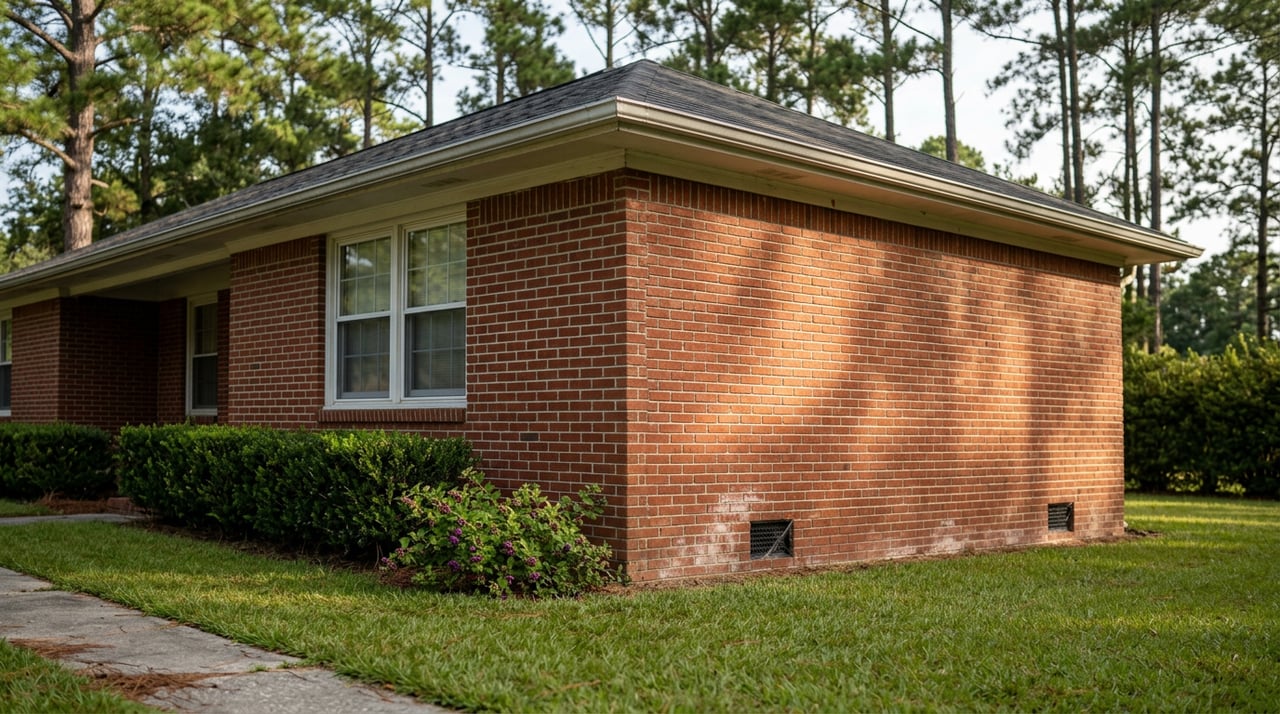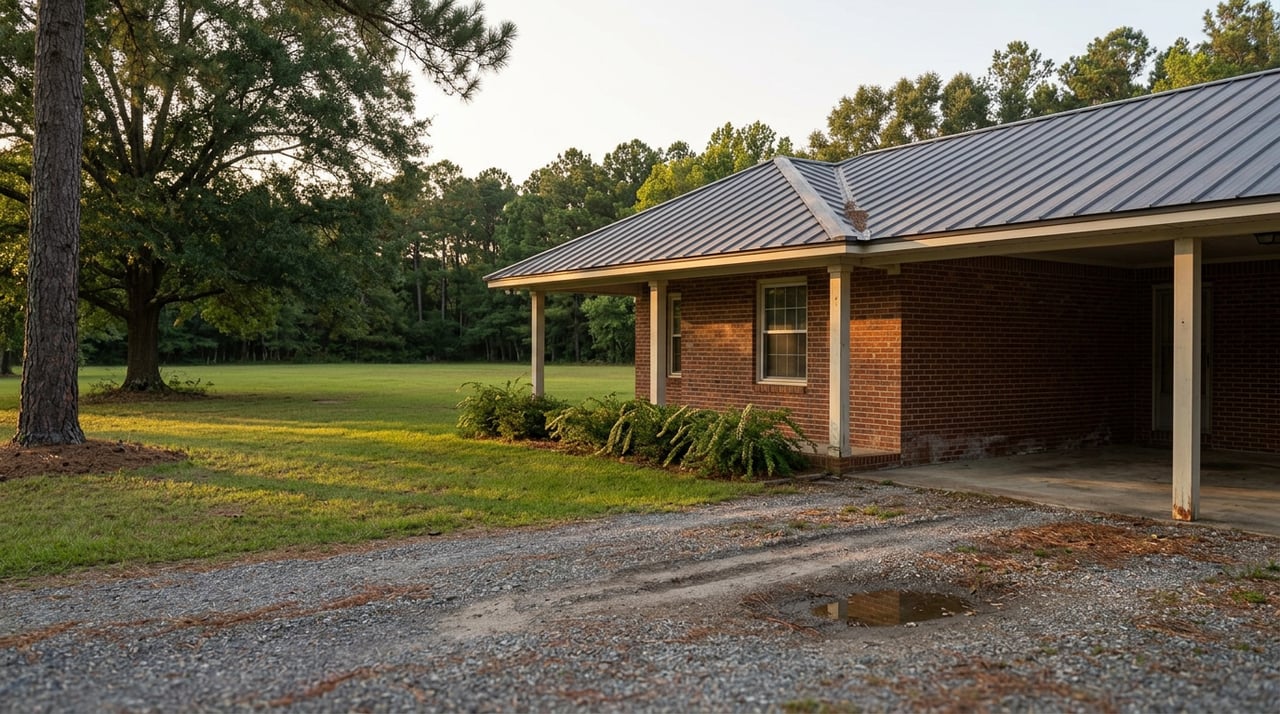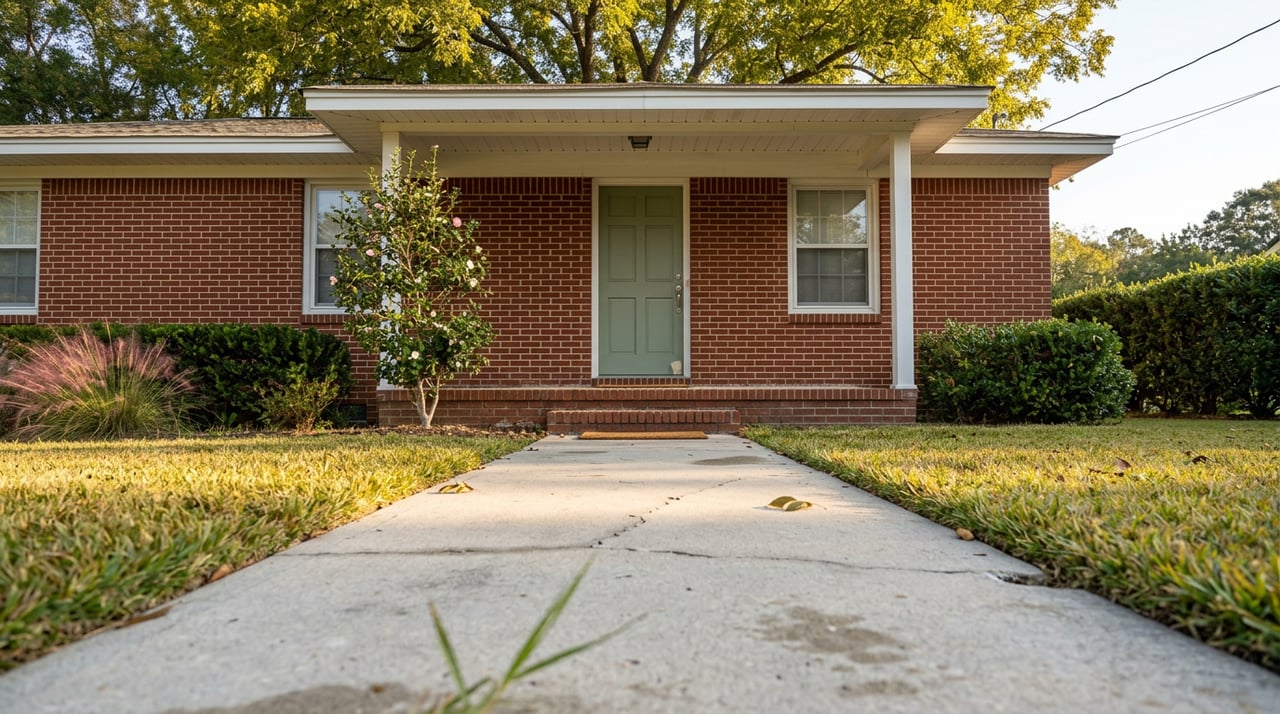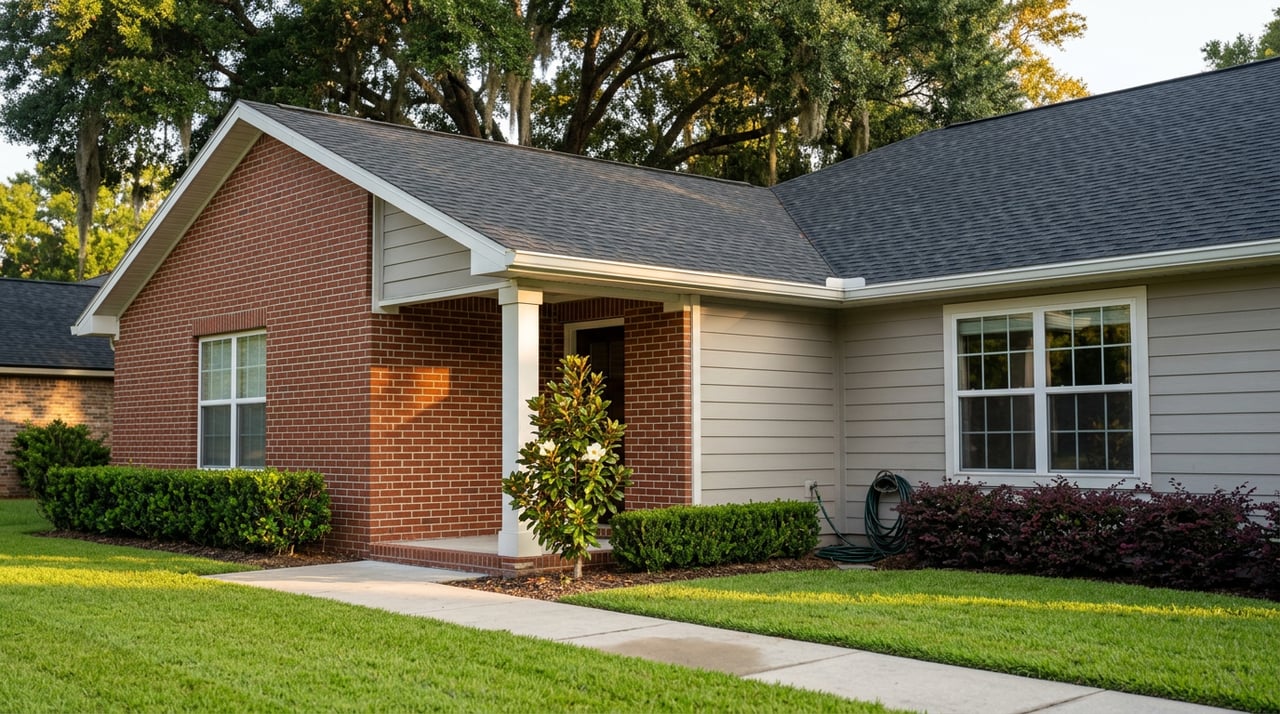
Drive Berryhill Road in Pace this month and you will pass three new construction signs within about ten minutes of each other. The floor plans look similar. The price tags, at least on the surface, land in the same range. What does not show up on any yard sign is that one of these communities now answers to a government board that did not exist in Santa Rosa County two years ago, while its neighbors down the road do not.
That distinction is not a footnote. It is the difference between a home that owes money to a private homeowners association with a capped annual bill and a home that sits inside a special-purpose unit of local government with the legal authority to levy assessments on your property tax bill for the next two or three decades.
Santa Rosa County Just Got Its First One
On August 2, 2023, the Santa Rosa County Board of County Commissioners approved Ordinance No. 2022-12, establishing the Parkland Community Development District. It is a Community Development District, or CDD, authorized under Chapter 190 of the Florida Statutes, and by the district's own account it is a first for this county.
The district is tied to Parkland Place, a new Adams Homes community coming to Berryhill Road in Pace. The plan includes sidewalks connecting to an amenity center with a pool, a splash pad, tennis and pickleball courts, a playground, a dog park, and nature trails. Homes are priced from the low $300s. Adams Homes has built in the Southeast since 1991 under what the company describes as a value-focused approach, and Parkland Place is being marketed as the company's newest Pace project.
None of that is unusual for new construction in Florida. What is unusual, at least locally, is the CDD attached to it. Florida has more of these districts than any other state, with over a thousand active statewide as of 2025, a number that has grown by more than half since 2020. Almost all of that growth has clustered around Central and South Florida's master-planned subdivisions. A CDD showing up in Santa Rosa County is new territory, and it changes the math for anyone comparing Pace neighborhoods on price alone.
What a CDD Actually Is, in Plain Terms
A homeowners association is a private organization. Its dues are capped by its own governing documents, and it answers to a volunteer board elected from residents.
A Community Development District is different in kind, not just in degree. It is a unit of local government, created by county ordinance, with the power to issue bonds, levy assessments, and hold public meetings under Florida's Sunshine Law. It exists to finance the roads, drainage, utilities, and amenities that a developer would otherwise have to pay for up front and fold into the sale price.
Instead, the CDD borrows the money through tax-exempt bonds, and the homeowners repay it over time through a non-ad valorem assessment that shows up on the property tax bill every year. That assessment usually has two parts. One is the debt service, which repays the original bonds on a fixed schedule, typically 20 to 30 years, and disappears once the bonds are retired. The other is operations and maintenance, which pays for the ongoing upkeep of shared facilities like the pool or the trails, and which does not expire. It continues for as long as the district exists, and the board can adjust it year to year.
If you finance the home and escrow your taxes, both pieces get folded into your monthly mortgage payment. That means a CDD assessment does not just show up once a year. It quietly raises your monthly housing cost and your debt-to-income ratio at the same time, which is exactly the kind of detail a builder's payment calculator tends to leave out of the first number you see.
A home's list price tells you what the builder wants for the structure. It does not tell you what the land itself owes.
Three Communities, Three Different Answers
Ashley Plantation and Stonechase sit within a couple of miles of Parkland Place and offer a useful contrast, because both are established, both are HOA-governed, and neither carries a CDD.
Ashley Plantation is a 467-acre D.R. Horton community, most of it built out between 2017 and 2019, with a recreation center, a walking bridge over Chase Creek, and access to conservation areas. Its HOA dues run in the range of $560 to $600 a year, paid annually, with a late fee if the payment misses the January 31 deadline.
Stonechase is a gated community where Lennar has continued selling its Classics and Majors collections into 2026, cutting several floor plans by 2 to 4 percent between late 2025 and early 2026. Its HOA runs around $395 a year, but the association carries no reserve study and no funded reserves, which means a private road, a gate, and shared ponds could eventually require a special assessment of their own kind, separate from anything a CDD would do.
| Community | Governance | Approximate annual due | CDD? |
|---|---|---|---|
| Parkland Place (Adams Homes) | HOA plus Parkland CDD | Not yet on the tax roll | Yes, established 2023 |
| Ashley Plantation (D.R. Horton) | HOA only | About $560 to $600 | No |
| Stonechase (Lennar) | HOA only, no funded reserves | About $395 | No |
The Parkland CDD assessment is not yet reflected on the tax roll because the community is still in its early phase. That is worth sitting with. Early buyers in a new CDD district often see a lower advertised carrying cost simply because the debt service has not been fully levied yet, not because the obligation is smaller. The bonds still get repaid. The only question is by whom and on what timeline.
The Board Question Nobody Asks at the Model Home
Under Chapter 190, a newly formed CDD is initially controlled by its developer, since the developer owns the land and votes are allocated by acreage. Control shifts to elected resident supervisors once the district reaches a threshold, generally six years after the initial board or ten years for districts over 5,000 acres, and only once the district has enough registered voters living there. Until that transition happens, the developer sets the budget.
That is not automatically a red flag. It is simply a fact worth knowing before you assume the pool schedule or the landscaping contract is something the neighborhood decided on its own. For a brand-new district like Parkland, that transition is still years away.
What This Means If You're Comparing Pace Listings
The instinct when two homes list at similar prices is to compare square footage and finish level. That instinct misses the part of the comparison that compounds over decades. A few questions worth asking before you assume two Pace communities cost the same to hold:
- Does this property sit inside a CDD, and if so, is the assessment already showing on the tax bill or still pending as the community builds out?
- What portion of the CDD assessment is debt service versus operations and maintenance, and when does the debt service portion retire?
- For an HOA-only community, does the association have a funded reserve study, or could a major repair mean a special assessment with no warning?
- How is the CDD or HOA fee treated in your specific loan approval, since it directly affects your qualifying debt-to-income ratio?
None of these questions show up on a listing sheet. They show up when you ask the district, the HOA management company, or your lender directly.
A Few Straight Answers
Is a CDD assessment tax deductible like my property tax? Generally, no. Because it is a non-ad valorem assessment rather than a tax based on your home's value, the IRS typically treats only the ad valorem portion of your bill as deductible.
Can I pay off the CDD early? In many districts, yes, you can prepay the remaining debt service in a lump sum by contacting the district's manager for a payoff figure. It rarely makes financial sense unless you plan to stay well past when the bonds would have matured anyway.
Does every new Pace subdivision have one now? No. Parkland Place appears to be the first in the county's history. Ashley Plantation, Stonechase, and most established Pace neighborhoods run on ordinary HOA dues with no CDD attached.
If I already own in Ashley Plantation or Stonechase, does any of this affect me? Not directly. Your obligation is whatever your HOA documents already say. The relevant question for existing owners is closer to whether your association has funded reserves, since that determines whether a big repair down the road becomes a routine expense or a surprise bill.
Comparing new construction in Pace means comparing more than the sign in the yard. If you are weighing Parkland Place against Ashley Plantation, Stonechase, or another Santa Rosa County community and want a clear read on what each one actually commits you to over the life of the loan, Kelley Real Estate Co can walk through the district documents, the HOA financials, and the numbers your lender will actually use, before you write an offer instead of after.