Buying land around Jay can look simple at first. A parcel shows up on a map, the price seems right, and you start picturing a home, workshop, or future investment. But with rural land, the real surprises usually show up after the contract unless you check the right details early. In this guide, you’ll learn how to verify a parcel, confirm buildability, budget for the real costs, and move in the right order so your land purchase around Jay feels a lot more straightforward. Let’s dive in.
Start With the Parcel Details
Before you focus on price per acre, make sure you know exactly what you are buying. In Santa Rosa County, the Property Appraiser identifies, maps, values, and classifies parcels, including agricultural classification for tax purposes. That makes it a strong starting point for parcel ID, ownership, and land-use classification.
Just remember what that office does not do. It does not maintain deeds, surveys, or titles. For those recorded documents, you need to verify the records trail through the Santa Rosa County clerk’s official records.
Use GIS as a First Look
County mapping tools can help you screen a property quickly. You can use them to get a general sense of boundaries, nearby roads, and surrounding conditions. That is helpful when you are narrowing down options around Jay.
Still, Santa Rosa County says its GIS data is updated regularly but does not guarantee accuracy, completeness, or currency. In plain terms, a map is a starting point, not proof. You should not treat an online map as a substitute for a survey or permit review.
Check If the Parcel Is in Town Limits
This is one of those details that can quietly affect your timeline. If a parcel is inside the Town of Jay limits, county materials say city approval is required before the county will issue a residential building permit.
That means a property can seem straightforward on paper but still need town-level signoff before construction can move forward. If you plan to build, confirm the parcel’s jurisdiction early.
Confirm Access Before You Fall in Love
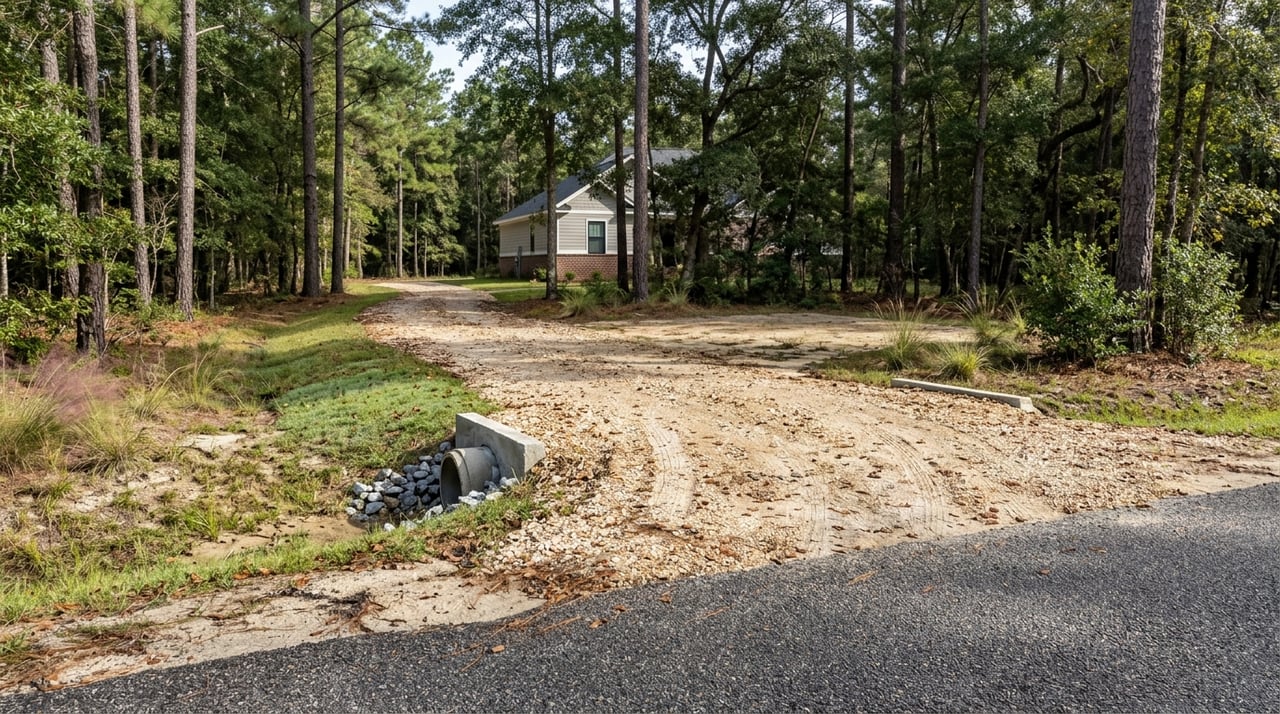
Access issues are one of the biggest reasons land buyers get caught off guard. A property may look like it touches a road, but that does not automatically mean you can build a driveway without additional approvals.
Santa Rosa County says a county-issued driveway permit and inspections are needed when a driveway connects to a county-maintained road. Some county roads also require access-management review through Planning and Zoning. The county also advises buyers to confirm who maintains the road before applying.
Road Frontage and Legal Access Matter
You want to know more than whether a road is nearby. Ask whether the parcel has legal access, whether the road frontage is usable, and whether driveway approval is likely based on the exact road type and location.
This is especially important for larger tracts and rural homesites around Jay. A parcel without practical access can create delays, added costs, or major limits on what you can do with the property.
Verify Utilities and Site Buildability
A common mistake is assuming nearby land has the same utility setup as the next parcel over. Around Jay, utility availability can change from one property to another.
Santa Rosa County lists Town of Jay Utilities among local water and sewer providers, and its 2024 utility report identifies Jay as one of the sewer franchise areas. Outside centralized water franchise areas, the county says development relies on private wells for potable water. So depending on the parcel, you may have public utilities, private systems, or some combination of both.
Septic and Well Needs Are Site Specific
If the property will need septic, details matter more than many buyers expect. Santa Rosa County septic application materials require a site plan showing boundaries, dimensions, structures, easements, wells, water lines, drainage features, surface water, and nearby features. The application also requires a legal description or survey.
That tells you something important right away. A casual aerial image is not enough to confirm whether a parcel is ready for a homesite.
Test Private Well Water
If the parcel uses a private well or may need one later, plan for testing. Florida health guidance recommends testing private well water for bacteria and nitrate at least once a year.
For rural acreage buyers, that matters because well responsibility falls on the property owner rather than a public utility. If you are buying land with an existing well, or counting on drilling one, include water testing and well review in your due diligence.
Utility Setup Can Affect Future Plans
Santa Rosa County’s 2024 utility report also gives an important planning clue. Current policy allows residential development with septic tanks at 4 units per acre when centralized water is available and 2 units per acre when septic and a private well are used.
If you are thinking beyond one home, this is worth checking early. Utility status can affect what the parcel can realistically support, whether that means a future homesite, an additional dwelling, or a small subdivision concept.
Check Floodplain and Environmental Limits
Flood risk is not just a coastal concern. Santa Rosa County specifically advises buyers to ask whether a property is in a floodplain, whether it has flooded before, and what local rules apply.
That is a big deal for both cost and usability. The county also notes that homeowners insurance usually does not cover flood loss and that most federally backed mortgage lenders require flood insurance in high-risk areas.
Rural Land Still Has Rules
A large parcel can feel wide open, but county rules may still shape what you can do with it. Santa Rosa County’s Land Development Code covers floodplain management, wetlands protection, stormwater, resource protection, access management, minimum lot sizes, and special overlay districts.
So when you ask, “Can I build on this land?” the answer is rarely based on acreage alone. Zoning, overlays, flood conditions, and environmental features all matter.
Don’t Assume You Can Clear Right Away
This is another surprise point for buyers. Santa Rosa County materials tie land clearing to permit approval, zoning review, flood review, and erosion-control requirements.
The county’s residential permit checklist says clearing is not permitted until after approval and issuance of the building permit. If your plan depends on quickly clearing trees or opening up a homesite, confirm that path before closing, not after.
Floodway Parcels May Need Extra Engineering
Some properties come with added documentation needs. County permit materials say new construction in a designated floodway requires a registered engineer’s signed and sealed no-rise certification along with flood-hazard elevations and other documentation before permit issuance.
That does not always mean a parcel is unusable. It does mean you need clear answers early so the property’s true cost and timeline do not catch you by surprise.
Understand Agricultural Classification
Around Jay, many buyers look at pasture, timber, or larger acreage with agricultural tax treatment in mind. This is where buyers sometimes confuse tax classification with zoning.
Santa Rosa County’s Property Appraiser says agricultural classification is not the same as zoning, requires an annual application by March 1, and does not transfer automatically when ownership changes. So if a seller’s tax bill looks favorable, do not assume you will keep that same treatment after closing.
Budget for More Than the Purchase Price
Land buyers often plan for the contract price and maybe a survey. In reality, your budget may also need to include title work, financing costs, documentary taxes, recording costs, permits, utility work, septic or well expenses, and impact fees if you plan to build.
This is one of the areas where a detail-driven approach really helps. When you understand the full picture early, you can make a much stronger decision about whether a parcel still fits your goals.
Know the Florida Taxes and Recording Costs
The Florida Department of Revenue says deeds that transfer an interest in Florida real property are subject to documentary stamp tax. Recorded mortgages are also subject to documentary stamp tax plus nonrecurring intangible tax.
These costs usually come due when documents are recorded. If you are financing land, make sure those charges are part of your early cost estimate.
Impact Fees May Apply Later
If you plan to build, Santa Rosa County says transportation impact fees approved in 2025 must be paid before or at the time a building permit is issued. That may not affect your land closing date, but it can affect your construction budget.
For buyers planning a homesite, it helps to think in two phases: land purchase costs now, then permit and build costs later.
Get Financing Lined Up Early
Do not wait until you have found the perfect tract to start financing conversations. The research guidance recommends contacting multiple lenders, getting preapproved, and comparing Loan Estimates because costs and timelines can differ.
That matters even more with land. Some lenders have tighter rules, different down payment expectations, or narrower timelines for vacant land and rural parcels.
Be Careful With Seller Financing
Seller financing can sound convenient, especially for rural land. But contract-for-deed arrangements are not the same as a traditional mortgage.
In that setup, the seller keeps legal title until the contract is fulfilled, and the buyer may still be responsible for taxes, insurance, repairs, and maintenance during the term. If seller financing is on the table, make sure you understand exactly how title, payment risk, and default terms work before moving forward.
Follow the Right Order
With land around Jay, the sequence matters almost as much as the parcel itself. A rushed process can lead to avoidable surprises.
A practical order based on county guidance is to verify parcel details, zoning, and access first. Then move into survey and title review, confirm floodplain, septic, and utility status, lock in financing, close and record the deed, and only then move into the permit path and any required notice of commencement before clearing or construction begins.
Keep the Permit Timeline in Mind
Santa Rosa County says a permit application can be abandoned after 180 days. It also says a permit becomes invalid if work does not begin within six months or if work is suspended for six months.
If you are buying now and planning to build later, that timing matters. You want your land strategy, financing, and build timeline to stay aligned.
Build the Right Team
A smooth land purchase usually takes more than one professional. Around Jay, your core team often includes your real estate agent, lender, title or settlement agent, surveyor, septic or well professional, and the relevant county offices for planning, floodplain, and permitting.
That may sound like a lot, but each person helps reduce risk in a different way. The goal is simple: get clear answers before closing so the property works the way you expect it to.
If you are thinking about buying land around Jay, a calm, step-by-step approach can save you time, money, and stress. Charles Kelley brings a practical, detail-focused style to land and rural property searches across Northwest Florida, helping you ask the right questions before you commit. When you are ready to talk through a parcel, your plans, or the next steps, connect with Charles Kelley.
FAQs
What should you verify first when buying land around Jay, Florida?
- Start with the parcel ID, ownership, land-use classification, and recorded deed history, then confirm zoning, access, and buildability before focusing on price.
Does a GIS map confirm land boundaries in Santa Rosa County?
- No. County GIS is a useful screening tool, but Santa Rosa County says accuracy and completeness are not guaranteed, so a survey and official reviews are still important.
Do you need special approval to build inside the Town of Jay?
- Yes. County permit materials say city approval is required before Santa Rosa County will issue a building permit for parcels inside the Town of Jay limits.
How do utilities work for land near Jay, Florida?
- Utility service depends on the exact parcel. Some properties may have access to public water or sewer, while others may rely on private wells and septic systems.
Can you clear land right after closing in Santa Rosa County?
- Not automatically. County materials say clearing is tied to permit approval, zoning and flood review, and related site requirements.
Does agricultural classification transfer to a new land owner in Santa Rosa County?
- No. The Property Appraiser says agricultural classification is not transferable when ownership changes and must be applied for separately.
What extra costs should land buyers expect in Florida?
- In addition to the purchase price, buyers may need to budget for title work, surveys, documentary stamp tax, mortgage-related taxes if financing, recording costs, permits, and possible impact fees if building later.